
REI Network fundamentals and utility
REI Network is a high-performance, Ethereum-compatible Layer 1 blockchain designed to enable scalable decentralized applications with near-zero transaction fees. It is important to distinguish the REI Network L1 from the broader, often vague concept of "real estate tokenization." While the acronym suggests a focus on real-world assets, the protocol’s core utility lies in its infrastructure: providing a cost-effective, high-throughput environment for developers building dApps.
The network’s primary value proposition is its gasless infrastructure. By using a novel staking model, REI eliminates gas fees for end-users, aiming to make on-chain interactions cost-free. This approach removes a significant barrier to entry for mainstream adoption, allowing users to interact with decentralized applications without managing complex fee markets or holding native tokens solely for transaction costs.
Security and network integrity are maintained through the $REI token. Holders can earn rewards by voting their $REI to help secure the network, choosing nodes and starting to earn in a straightforward staking process. This mechanism aligns the incentives of validators, delegators, and the protocol itself, ensuring that the network remains decentralized and robust as it scales.
For developers, the Ethereum compatibility means they can deploy existing Solidity smart contracts with minimal modification, leveraging the REI Network’s lower costs and higher throughput. This positions REI not as a speculative real estate vehicle, but as a technical solution for scalable, user-friendly blockchain applications.
2025–2026 roadmap and ai integration
REI Network is executing a strategic pivot from a lightweight EVM-compatible chain into a smart, cross-chain, and AI-native infrastructure. This shift, detailed in recent AMA recaps with leadership, aims to position the network as a dedicated layer for decentralized artificial intelligence applications. The roadmap emphasizes reducing friction for developers and users through gas-free transactions and enhanced interoperability.
The core of this update involves eliminating gas fees for end-users. By leveraging a novel staking model, REI Network subsidizes transaction costs, allowing developers to deploy complex AI workloads without worrying about volatile gas prices. This approach mirrors the utility of established chains like Solana but targets a specific niche: AI-driven dApps that require high throughput and predictable costs.
Cross-chain capability is another pillar of the 2025–2026 vision. The network is integrating deeper interoperability protocols to allow seamless asset and data movement between REI and other major blockchains. This connectivity is essential for AI agents that need to operate across multiple ecosystems, fetching data or executing trades on different chains without manual bridging.
Technical implementation focuses on optimizing the EVM environment for AI-specific computations. This includes pre-installed smart contracts for common AI tasks, such as data validation and oracle integration, which reduce deployment time and complexity. The goal is to make REI Network the default choice for AI startups seeking a scalable, cost-effective foundation.
While the technical roadmap is ambitious, the market remains cautious. Current price action reflects broader crypto sentiment, with short-term forecasts suggesting potential volatility. Investors should monitor official announcements from REI Network for concrete updates on mainnet upgrades and partnership integrations rather than relying on speculative price models.
REI Network Technical Analysis and Price Trends
REI Network (REI) is currently navigating a period of tight consolidation, with price action stabilizing near the $0.003 mark. This phase reflects a broader market hesitation as the token tests key support levels before committing to a directional breakout. For investors monitoring the 2026 roadmap, these technical signals provide a clearer picture of market sentiment than speculative forecasts.
The chart below highlights the recent trading range, showing how REI has been contained between established support and resistance bands. A sustained move above the $0.0033 resistance level could trigger a breakout, potentially targeting higher liquidity zones. Conversely, failure to hold current support may lead to further downward pressure.
Market data from CoinMarketCap indicates that technical indicators are leaning toward neutrality, suggesting that a significant catalyst is needed to shift momentum. While some prediction models suggest long-term declines, short-term price action remains heavily dependent on breaking the current consolidation pattern. Traders should watch for volume spikes accompanying any price movement, as these often precede sustained trends.
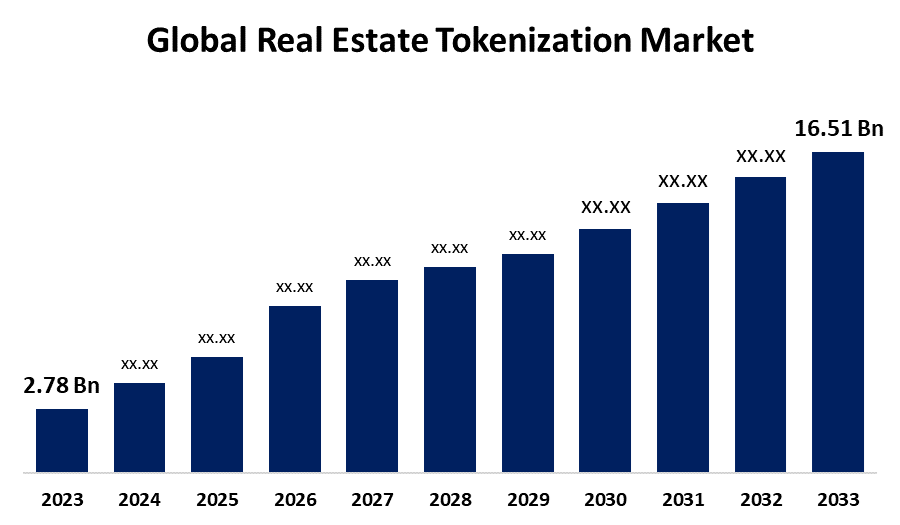
The broader context of real estate tokenization continues to influence investor interest in infrastructure like REI. As the market matures, the ability of the network to handle high-throughput transactions without gas fees remains a fundamental utility driver. However, technical price action currently dominates short-term trading decisions, making chart analysis essential for timing entry and exit points.
Staking rewards and node participation
REI Network uses a Proof-of-Stake model to secure its Ethereum-compatible Layer 1 chain. The protocol relies on validators to process transactions and maintain network integrity. In return, participants earn rewards in $REI tokens. This mechanism aligns the economic interests of node operators with the long-term health of the network, ensuring that security is maintained by those with a financial stake in the system.
The staking process on REI is designed to be accessible. Users can vote for specific nodes to help secure the network, effectively delegating their stake to validators who handle the technical work of block production. This setup allows token holders to earn passive yield without needing to manage server infrastructure. The network aims to eliminate gas fees for end-users through this novel staking model, making on-chain interactions cost-free while still compensating the validators who process them.
Choosing a node involves evaluating performance and reliability. Validators are selected based on their stake weight and operational consistency. For investors, the primary benefit is the accumulation of $REI tokens over time, which can offset market volatility. However, staking is not without risk; slashing conditions may penalize nodes for downtime or malicious behavior, which can result in the loss of a portion of the staked tokens.
To understand the current market context for staking yields, it is useful to look at the broader price action of the token. The following chart shows the recent trading volume and price movement, which can impact the real-world value of staking rewards.
2026 price forecasts and market sentiment
Predictions for the REI token in 2026 vary wildly, reflecting the inherent volatility of the broader crypto market. Algorithmic models from sources like TradingBeasts suggest a conservative floor near $0.022, while CoinCodex models project a more bearish trajectory toward $0.0025. These technical forecasts rely on historical price action and momentum indicators rather than fundamental utility.
Conversely, community sentiment and broader market narratives paint a more optimistic picture. Some analysts argue that as REI Network secures partnerships in digital real estate and expands its liquidity, the token could target the $7.00 to $9.50 range. This bullish case hinges on the successful adoption of its gasless infrastructure and the migration of decentralized applications to its Layer 1 chain.
The divergence between algorithmic predictions and community optimism highlights the risk-reward dynamic. Traders must weigh the technical indicators that suggest consolidation or decline against the long-term potential of the network's utility. For those tracking the asset, official market data provides a more reliable baseline than speculative price targets.
Frequently asked questions about REI Network (REI)
What is the REI token used for?
REI Network (REI) is the native utility token of a high-performance, Ethereum-compatible Layer 1 blockchain. Its primary function is to facilitate scalable decentralized applications (dApps) with near-zero transaction fees. The network utilizes a novel staking model to eliminate gas fees for end users, aiming to make on-chain interactions cost-free while securing the network through validator participation. For detailed technical specifications, refer to the official REI Network documentation.
How to buy REI Network (REI)?
The most direct method to acquire REI tokens is through major centralized exchanges like Binance. The process involves creating a verified account, depositing fiat currency or stablecoins (such as USDT), and executing a spot trade for the REI/USDT pair. Once purchased, tokens can be held in the exchange’s wallet for staking opportunities or withdrawn to a self-custody wallet compatible with the REI Network EVM. Always verify the contract address on CoinMarketCap before interacting with any platform.
What is the price prediction for REI coins in 2026?
Market forecasts for REI in 2026 vary significantly based on technical analysis models. Some projections suggest a potential low of approximately $0.022 in 2026, while others estimate an end-of-year price around $0.0025, reflecting a decline from current levels. These figures are derived from algorithmic models and should be treated as speculative scenarios rather than guarantees. Always cross-reference prediction data with on-chain metrics and official network updates.
No comments yet. Be the first to share your thoughts!