
REI Network Fundamentals and Token Utility
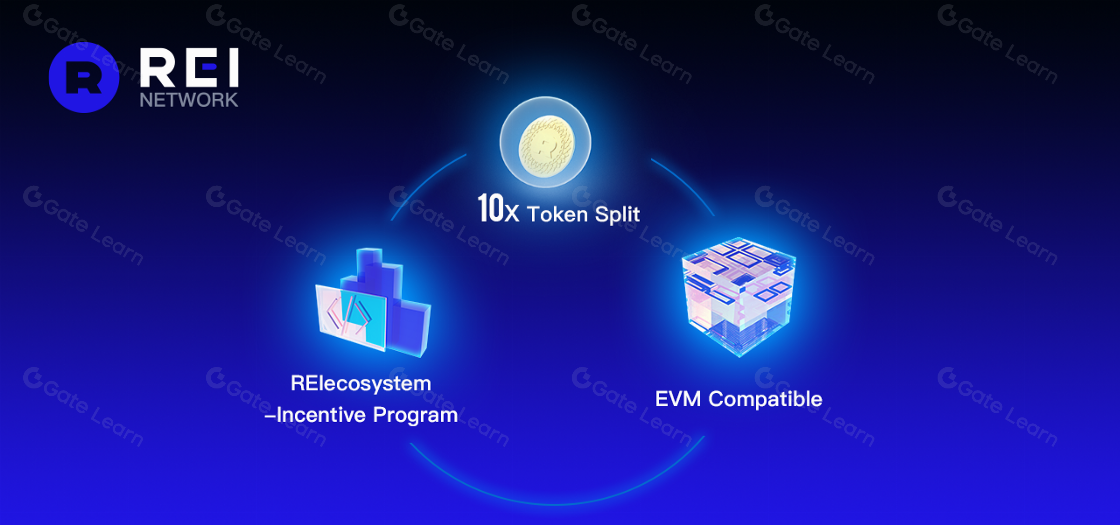
REI Network is an EVM-compatible, AI-native blockchain built for high-performance decentralized applications. Born from the GXChain ecosystem, it is not a simple fork but a complete reconstruction of network consensus, merging Ethereum compatibility with green, modular performance. This architecture allows developers to deploy smart contracts using familiar tools while leveraging REI’s specific throughput capabilities.
The $REI token serves as the primary utility asset for network security and governance. Users can stake $REI to participate in the consensus mechanism, earning rewards by voting for validators. This staking model secures the network against attacks while aligning the incentives of node operators with the health of the protocol. It distinguishes REI from generic real estate tokens by focusing on infrastructure and computational value rather than property-backed assets.
For traders and analysts tracking the network's market performance, live data is essential for accurate assessment. The following widget provides real-time pricing for the REI/USD pair, reflecting current market sentiment and liquidity.
2025 to 2026 roadmap highlights
REI Network is shifting its core infrastructure to support AI-native applications and cross-chain interoperability. The 2025–2026 roadmap outlines the transition from a lightweight EVM-compatible chain to a smart, gas-free environment designed for high-throughput workloads. This upgrade targets the specific bottlenecks that have historically limited decentralized AI training and inference on public ledgers.
The primary technical goal is the implementation of cross-chain gas-free transactions. By abstracting gas costs away from the user, REI Network aims to remove the complexity of multi-chain asset management. Users can interact with AI-driven dApps across different blockchains without needing to hold native tokens for transaction fees on every chain. This abstraction layer is critical for mass adoption in sectors where latency and cost sensitivity are paramount.
Simultaneously, the network is integrating AI-native features directly into its smart contract layer. This allows for on-chain verification of AI model outputs and secure data provisioning for machine learning tasks. The combination of gas-free cross-chain interactions and native AI support creates a specialized environment for decentralized compute markets, distinguishing REI from general-purpose EVM chains.
REI Network Price Action and Trends
Technical analysis of REI Network (REI) requires distinguishing its specific market behavior from broader real estate token narratives. The asset operates within a distinct liquidity pool, often showing decoupled volatility relative to major cryptocurrencies like Bitcoin or Ethereum. Understanding these patterns helps traders identify entry points aligned with the network's development milestones rather than general market sentiment.
Recent price action reveals a consolidation phase following earlier volatility. Traders should monitor key support levels where buying interest historically emerges. Resistance zones often align with previous high-volume trading nodes. Breaking above these levels with sustained volume is a primary indicator of bullish momentum, while failure to hold support suggests continued sideways movement or downside pressure.
Momentum indicators such as the Relative Strength Index (RSI) provide context for overbought or oversold conditions. When REI trades near resistance with high RSI, profit-taking often occurs. Conversely, low RSI readings near support can signal accumulation. These metrics are most effective when combined with volume analysis to confirm the strength of price moves.
For real-time visualization of these trends, the following chart displays the current REI/USD price action. This provider-backed widget updates live, ensuring you are viewing accurate data for technical assessment.
2026 Price Forecasts and Market Sentiment
Analysts project a wide range of outcomes for REI Network in 2026, reflecting the token's position between early-stage adoption and potential utility-driven growth. The divergence in forecasts highlights the speculative nature of long-term crypto pricing models, where macroeconomic factors and network-specific milestones play decisive roles.
Conservative projections suggest modest gains, with some models estimating a floor price around $0.023 for 2026. This view assumes gradual, linear adoption without significant breakthroughs in enterprise integration or major ecosystem expansions. Such scenarios typically account for broader market volatility and the challenges of sustaining user engagement in a crowded L2 landscape.
Conversely, bullish narratives point to a potential surge toward the $1.50–$2.50 range. These forecasts rely on the premise that REI Network’s focus on real-world asset (RWA) tokenization and enterprise-grade infrastructure will drive substantial demand. If real use cases emerge and institutional adoption accelerates, the network could capture significant value from its specialized niche.
The table below compares these varying predictions from third-party analysts, illustrating the spectrum of possible outcomes.
Investors should treat these figures as directional indicators rather than guarantees. The REI token's long-term value will ultimately depend on its ability to deliver tangible utility and secure partnerships within the RWA sector. Monitor network activity and official announcements for signs of progress toward these targets.
Community discussions and ecosystem growth
Sentiment around REI Network has shifted from speculative chatter to technical evaluation as the ecosystem matures. Early discussions on platforms like Reddit often centered on price volatility, but recent threads increasingly focus on the utility of the $REI token within the network's staking and governance mechanisms.
The official documentation highlights that users can earn rewards by voting to secure the network, a feature that drives organic engagement beyond simple trading. This shift toward active participation signals a maturing user base that understands the underlying technology rather than just the asset price.
While community forums provide qualitative insights, they should be viewed as supplementary to on-chain data. Developer activity and node operator growth offer more concrete evidence of adoption than social media sentiment alone.
Frequently Asked Questions About REI Tokens
What is the current price of REI coin?
REI Network (REI) is a Layer 2 blockchain focused on bridging real-world assets with the Ethereum ecosystem. As a high-stakes financial asset, its price fluctuates based on market sentiment and network adoption. For real-time accuracy, rely on provider-backed data rather than static snapshots. The live chart below tracks REI price movements against the US Dollar.
Is REI Network a good investment for 2026?
Investing in REI Network involves assessing its utility in real estate tokenization and its technical roadmap. The network aims to solve scalability and compliance issues for asset-backed tokens. While the 2026 outlook depends on broader crypto market trends and regulatory clarity, the project's focus on institutional-grade infrastructure suggests potential growth if adoption metrics align with its technical milestones.
How does REI Network differ from other real estate tokens?
Unlike generic real estate tokens that may represent fractional ownership in specific properties, REI Network operates as a Layer 2 infrastructure. It provides the technological backbone for tokenizing various real-world assets, including real estate, on Ethereum. This distinction makes it a platform play rather than a direct property investment, offering exposure to the broader trend of asset tokenization rather than a single asset's performance.
No comments yet. Be the first to share your thoughts!