
Pooled vs Single-Asset Tokenized Real Estate: Why Pools Deliver Better Liquidity and Diversified Yields
Picture this: you’re eyeing a slice of a luxury apartment building in Miami, tokenized and ready for your wallet. But what if tying your investment to just one property leaves you stuck when the market shifts? Enter pooled RWA real estate, the game-changer that’s drawing savvy investors away from single-asset tokens. These pools bundle multiple properties into one tradable package, promising smoother liquidity and steadier yields. I’ve watched this space evolve over the years, and the data backs it up: pools aren’t just trendy; they’re smarter.

Tokenized real estate burst onto the scene by slicing illiquid bricks-and-mortar into fractional shares. Platforms made it possible for everyday investors to own bits of high-value assets without needing millions upfront. Yet, as reports from Katten Muchin Rosenman highlight, single-asset tokens often fall short on true liquidity. They’re like owning a unique painting; beautiful, but tough to sell quickly without slashing the price.
The Hidden Risks of Single-Asset RWA Exposure
Single-asset tokenization shines for targeted bets, say on that trophy office in downtown Manhattan. But here’s the rub: your returns hinge on one property’s fate. A leaky roof, tenant exodus, or local zoning snag can tank value overnight. Analyses from Primior point out these single asset RWA risks, where trading efficiency suffers from thin order books and mismatched buyer interest.
Think about it. Traditional real estate locks capital for years; tokenization was supposed to fix that. Instead, many single tokens languish on secondary markets with volumes trickling in. Elliptic’s breakdown notes fractional ownership helps entry, but without a broad buyer pool, you’re waiting months for an exit. I’ve advised clients burned by this, watching paper gains evaporate amid sluggish sales.
Regulatory hurdles compound the issue. Buzko Krasnov’s legal guide flags how U. S. and EU rules demand careful structuring for single assets, often limiting offshore appeal and global trading. No wonder liquidity stays shallow.
How Pooled RWA Real Estate Supercharges Liquidity
Now flip to on-chain real estate pools. By aggregating properties – think residential rentals in Texas, commercial spaces in Berlin, retail in Singapore – these funds create instant depth. RWA. io champions liquidity pools for tokenized real estate, enabling faster, cheaper trades via automated market makers. Phil Bak’s Substack piece nails it: pooling mirrors securitization’s history, preconditioning deep liquidity and market resilience.
Investors trade pool tokens 24/7 on DEXes, sidestepping broker delays. Entry barriers drop too; a $100 stake buys exposure to a diversified portfolio, not one finicky asset. Platforms like RealT and Lofty exemplify this, with secondary markets buzzing. Recent context shows tokenized real estate leaning hard into pools for exactly this reason: they unlock tokenized real estate liquidity that single assets dream of.
Single-Asset vs Pooled Tokenized Real Estate: Key Comparison
| Metric | Single-Asset | Pooled |
|---|---|---|
| Liquidity Depth | Low ❌ | High ✅ |
| Avg Trade Time | Days/Weeks ⏳ | Minutes/Hours ⚡ |
| Min Investment | High ❌ | Low ✅ |
| Risk Concentration | High (one asset) ❌ | Low (diversified) ✅ |
DeFi integration takes it further. Collateralize pool tokens for loans or yield farms, compounding returns without selling. Rain Infotech contrasts this with traditional management: blockchain cuts intermediaries, boosts transparency, and settles trades in minutes.
Diversified Property Tokens: Building Resilient Yields
Diversification isn’t buzzword bingo; it’s your shield. Pools spread risk across geographies, property types, and cycles. Rental income from one steadies dips in another; appreciation in urban hotspots offsets suburban slumps. Platforms report annual yields of 6-9% from rentals plus upside, far more reliable than single-asset volatility.
Ideasoft. io forecasts real estate as a top tokenization use case through 2025, precisely for this liquidity unlock via fractions and trades. Openware echoes opportunities in fractional ownership, tempered by smart pooling to navigate regs. I’ve seen portfolios thrive here, blending steady cash flow with blockchain’s edge.
That resilience translates to real numbers. Platforms like RealT and Lofty are proving pooled structures deliver diversified property tokens with annual yields hovering between 6-9% from rental streams and appreciation. One property’s vacancy? No sweat – others pick up the slack. Single assets can’t match that buffer, leaving holders exposed to outsized swings.
DeFi’s Turbocharge for Pooled Real Estate
Here’s where it gets exciting: tokenized pools plug straight into DeFi. Stake your pool tokens in liquidity protocols, earn yields on yields, or use them as collateral for low-interest loans. Wiseway Tec’s analysis spotlights how this slashes settlement times and costs, ditching legacy middlemen. Imagine borrowing against your diversified portfolio at 4% while it spits out 7% rentals – that’s compounding magic single tokens rarely touch.
I’ve guided investors through this shift, and the feedback is unanimous: pools feel alive, responsive to market pulses. Secondary trading volumes spike because buyers know they’re not betting the farm on one address. RWA. io’s take on liquidity pools underscores faster transactions and fractional perks, but pools elevate it to enterprise scale.
Of course, no investment’s bulletproof. Regs evolve, and smart contract risks lurk, but onshore-offshore hybrids from Buzko Krasnov’s playbook help platforms comply while scaling globally. Pools distribute those headaches across operators, not you.
Performance Snapshot: Pools in Action
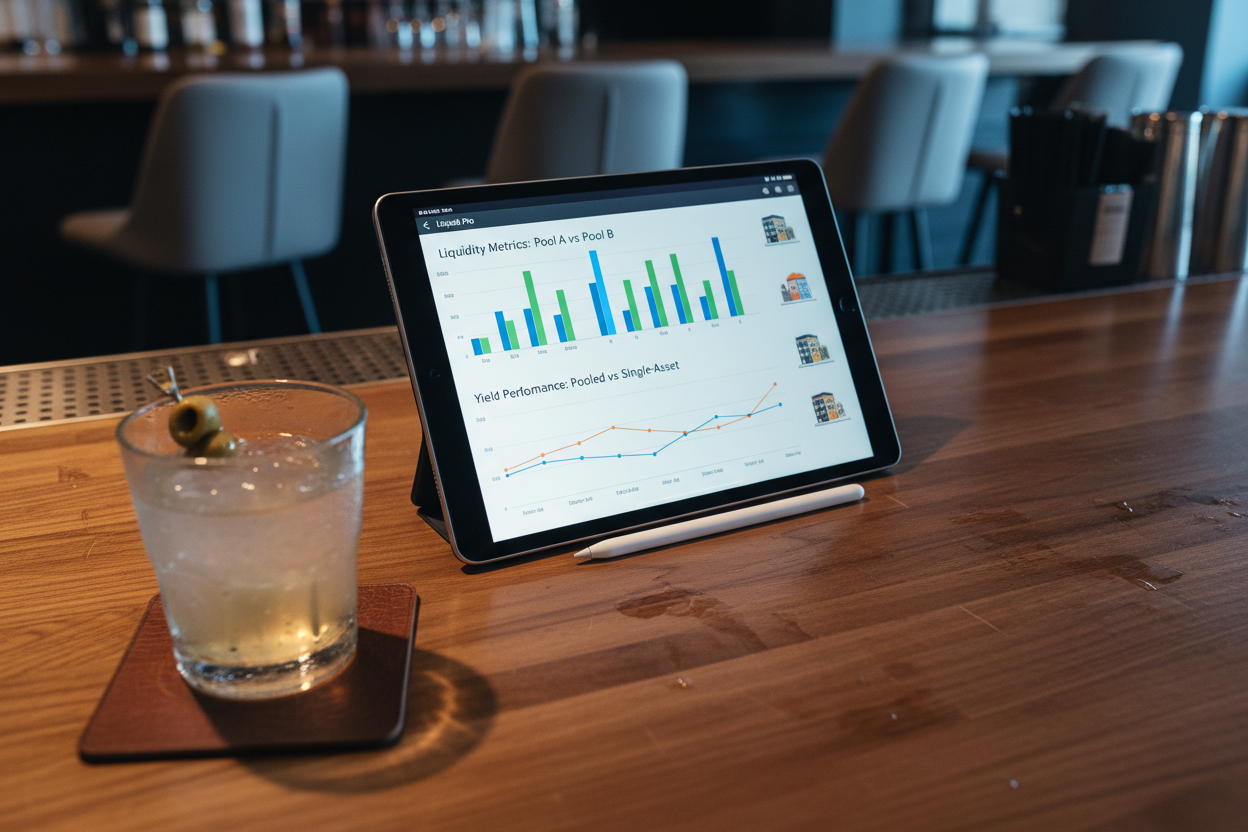
Let’s break it down with hard comparisons. Single-asset tokens might boast a hot property’s projected 10% return, but reality bites with 20% drawdowns from localized woes. Pools average out to steadier paths, blending residential cash cows with commercial growth plays. Primior warns of trading risks in solos; pools counter with thicker markets and AMM efficiency.
Pooled vs. Single-Asset Tokenized Real Estate: Key Metrics Comparison
| Metric | Pooled Tokens | Single-Asset Tokens |
|---|---|---|
| Avg Annual Yield | 6-9% 💰 | Varies 💸 |
| Liquidity Ratio | High 🔄 | Low ⏳ |
| Volatility | Low-Med 📉 | High 📈 |
| Entry Cost | $100 🚀 | $1K+ 🏦 |
Over 2025-2026, expect pools to dominate as tokenization matures. Ideasoft. io pegs real estate as prime for this, unlocking liquidity in stale markets. BakStack’s securitization parallel holds: depth breeds resilience.
Shifting to pooled RWA real estate isn’t just defensive; it’s offensive strategy. You’re not just owning property – you’re owning a machine that hedges, trades, and grows on autopilot. Clients tell me it reframes real estate from sleepy asset to dynamic powerhouse.
Ready to dip in? Start small on vetted platforms, eye those diversified pools, and watch your portfolio hum. The future’s fractional, fluid, and favors the pooled. Your move could be the smartest one this cycle.